


In the sixth century, the Irish monk Columba left his homeland and sailed north until he found a place of rock and wind. He settled on the small island of Iona, where the Atlantic ebbs eternally against the shore and the horizon never quite settles.
Early accounts describe Columba walking the island alone at dawn. He prayed along the waterline, where sea and sky blur into one another and the sound of crashing waves carries a strange resonance. The solitude felt less like absence and more like anticipation.
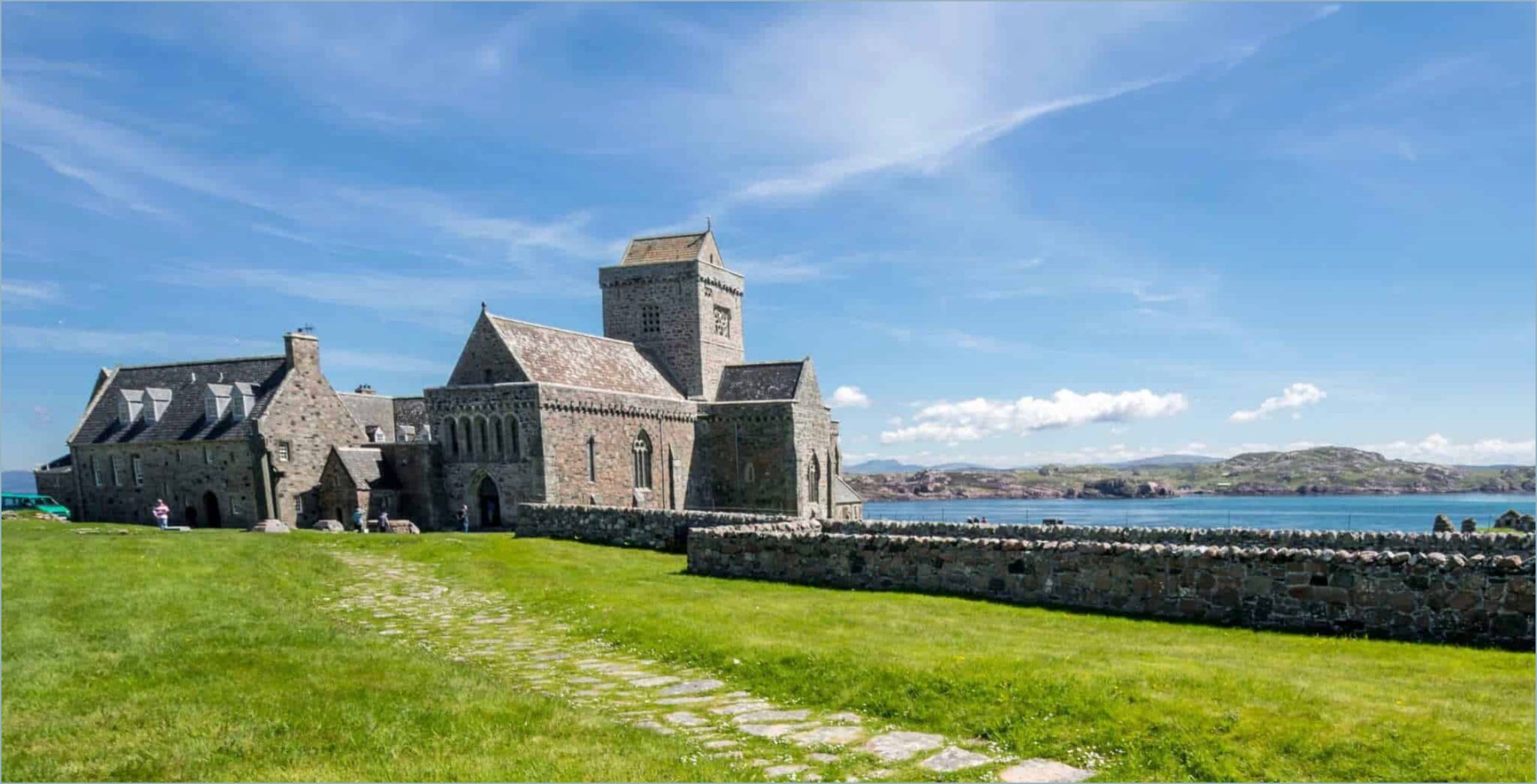
Columba believed God spoke out there by the waves. The loud breaking of the sea pierced the quiet of his prayers. By Columba’s own admission, the place itself seemed to listen.
Iona came to be known as a “thin place.” Pilgrims would later say that standing there felt like standing on a threshold, as if the mundane world had lost its grip. Heaven felt closer, not because of emotion or imagination, but because the earth itself reached out for it.
The Celts did not treat inspiration as a force of fate that arrived randomly. They believed it emerged where place and presence met: mountains, islands, rivers, shores. Where you stood shaped what you heard.
Maybe we don’t walk rocky coastlines expecting a divine encounter, but we still recognize this truth instinctively. Some places sharpen us. Others dull us. Some environments make our work feel strained and brittle. Others make it feel like breathing. The difference is rarely effort. It’s location.
When Work Has No Threshold
In the world of remote work, inspiration and productivity are not a given. If you’re a remote worker, you already know this!
Our work easily loses its sense of being set apart. The table where we eat becomes the desk where we write. The chair where we rest becomes the chair where we labor. Over time, the boundaries thin in the wrong direction.
This erosion shows up in documentation. Writers think carefully about structure, clarity, and audience, yet rarely about the physical conditions under which the writing happens. The assumption is that competence alone carries the work. But when every day begins in the same room, with the same light and the same noise, the craft starts to feel flat.
Documentation is conceptual, but writers are embodied. We write with nervous systems, senses, and emotions. The places we choose shape how well we listen, how patiently we think, and how honestly we translate complexity into language another human can use.
What the Ancients Understood About Attention
Columba did not find inspiration in the hustle-and-bustle of life. He walked the edge of land and ocean. Moses climbed Sinai. Jesus went into the wilderness beyond the Jordan. Scripture consistently treats insight as something received away from distraction, in landscapes that demand attentiveness.
These stories suggest that focus is not merely an act of will. It is often a response to environment. Certain places quiet unnecessary noise. Others heighten it. Thin places do not guarantee inspiration, but they create the conditions in which inspiration can be noticed.
Modern work culture tends to treat environment as accidental. The Celts treated environment as formative. They believed place could tutor the soul. That assumption feels foreign to many of us in the West, yet it explains why their language still resonates today. We haven’t stopped needing places that help us pay attention.
Why Documentation Suffers Without Place
Good documentation depends on posture as much as process. Writers working from environments that foster attention tend to write more clearly. They notice friction sooner. They resist unnecessary complexity.
Obviously, a thin place does not write a document for you. It simply removes enough noise that you can hear what matters. When the environment steadies the mind, prose steadies with it. When the surroundings feel real, the writing does too.
Columba didn’t bring inspiration to Iona. Iona made him receptive. The same dynamic applies to modern writers. Place becomes a quiet collaborator in the work.
Environmental psychology supports this intuition. A widely cited study from the University of Michigan found that exposure to natural environments improved directed attention and working memory, even when participants were not deliberately trying to rest. Urban environments, by contrast, depleted these cognitive resources.
The implication is straightforward. Our surroundings directly affect our capacity for clarity. Thin places may be described in spiritual language, but they align closely with what research shows about how human attention actually works.
Learning to Work Where You Can Hear
For a few months now, I’ve been working from the atrium in the Cleveland Museum of Art once a week. It’s become a kind of thin place to me. Completed in 2014 under the guidance of Uruguayan architect Rafael Viñoly, the atrium is a soaring, glass-enclosed space that sits at the heart of the museum, noted for its light, massive scale, and integration of old and new architectural styles. Viñoly created a unique space that feels connected to the nature of Ohio’s north shore but insulated from its harsher elements. And perhaps most importantly, it is surrounded by one of the greatest, most diverse art collections in the world. The atrium speaks.
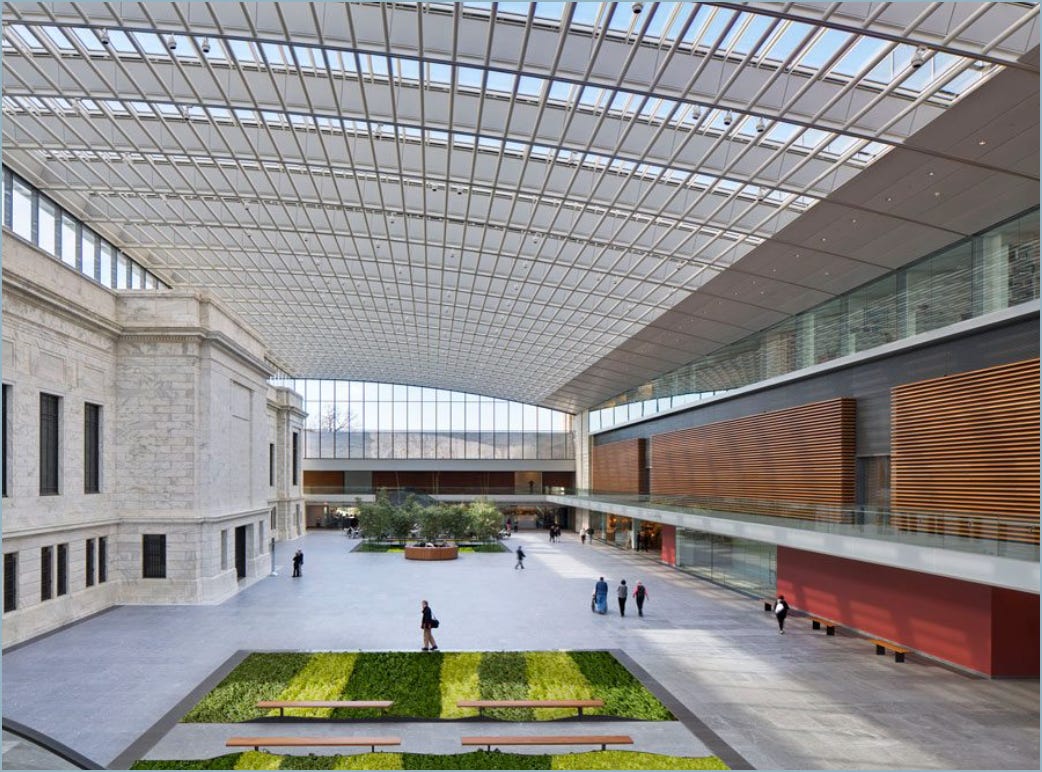
I noticed that my days in the atrium were always, without exception, spent well. I was more productive, more organized, and left more fulfilled. The atrium didn’t solve my life’s problems or reveal the company’s next steps, but it gave me a place to indulge beauty, discover solutions, and find God somewhere between.
So, my charge for you is the following:
Identify your thin place by paying attention to your body. Notice what happens to your breathing, your pace, and your emotional tone. Calm and clarity are better signals than comfort or convenience.
Match the place to the phase of writing. Drafting often benefits from environments that feel alive. Editing often requires quieter, more grounded spaces. Let the task guide the location.
Create a threshold for work. Even in remote life, choose places that signal transition. A café, a museum, a park bench, or a specific seat can mark the difference between labor and rest.
Let place discipline your posture. When the environment invites presence, you push less and listen more. The writing becomes responsive rather than forced.
Returning to the Shore
When I sit in the skylit atrium, writing doesn’t feel like work. It feels like breathing. The space removes the urgency to produce and replaces it with attention.
Columba walked the shoreline because it taught him how to listen. We find our own shores in different ways, but the lesson holds. Our best work rarely appears out of nowhere. It rises from the ground beneath us.
Where we stand still shapes what we hear.