


In June of 1923, Johnny Kilbane stepped back into the ring after nearly two and a half years away.
He was not just another contender. He was the champion. For eleven years (1912-1923), he held the World Featherweight title. No one in the division had ever held it longer, and no one since has repeated the feat. Kilbane was disciplined, elusive, and patient. He was known less for brute force and more for tactical control in managing a fight.
But that night in New York, he faced the Frenchman Eugène Criqui.
By the sixth round, it was over.
Criqui landed a right hook to the jaw that dropped Kilbane hard. The referee counted, and the title slipped away to a new victor. Kilbane’s history reign ended in a single exchange.
For many, Kilbane’s defeat is an appropriate salute to his career — like a warrior who proudly dies in battle. But for others, a question lingered around that fight. Not whether Kilbane was a great boxer. That was already settled. The question was quieter: Should Kilbane have taken the fight at all?
I’ve found myself mulling over this recently, because as it happens, Kilbane was my grandfather’s uncle.
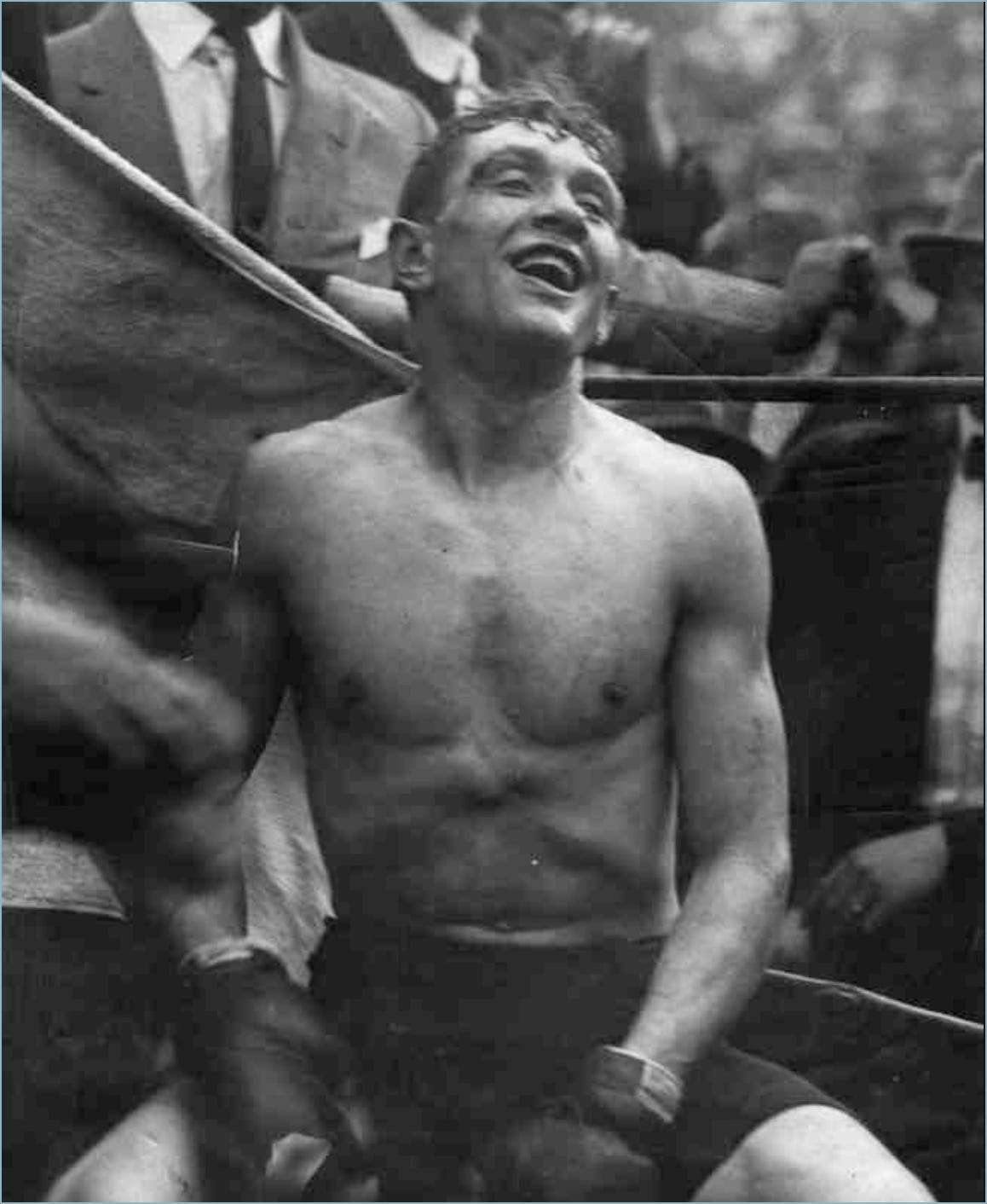
Courtesy of the Cleveland State University Library Special Collection
The Review That Changed the Document
Recently, I wrote a dense, technical article for a client in ad tech. I wrote something I thought was effective and clear to the end user, so I submitted it for review expecting a quick win and publish.
Much to my surprise, the client responded with dozens of suggested edits. By the end, I was looking at an entirely different article. And I did not like it.
I genuinely believed that my initial version of the document was better. Its wording was clearer and its layout removed friction for the reader. The version the product manager recommended introduced a complex structure, with level 4 and 5 headers that risked burying information too deep in the page to ever be found.
But I hit publish anyway.
I decided not to enter the ring and fight.
When the Fight Is the Problem
Kilbane did not lose because he forgot how to box. He lost because he stepped into a fight he did not need to take.
He had already done the work. Eleven years as champion had secured his legacy. Then, after a two-and-a-half year retirement, he came back to defend a title he did not have to risk. And in that decision, he exposed himself to a fight that carried consequences greater than the moment required.
Time away matters. The body changes and instinct dulls. The rhythm of the ring is not something you store and retrieve at will, but something you must live inside. Kilbane could still throw a punch, but he was no longer living in that rhythm.
So the mistake was not technical. It was the decision to enter the ring at all.
Technical writers make a similar mistake all the time.
We assume every piece of feedback is a fight worth taking. We treat each edit as a moment to defend clarity, structure, or craft. We step into debates over header levels, phrasing, and layout as if the title is on the line.
But it is not.
Not every comment deserves resistance. Not every disagreement needs to be resolved. When the core information is intact and the user can still succeed, the fight is often unnecessary.
And yet we step in anyway.
We argue over structure when the workflow still works. We spend time and energy protecting details that do not meaningfully affect the reader.
In doing so, we create risk where none existed. We turn a stable document into a contested space. We trade progress for control.
Some fights in documentation are real. They protect the user or somehow mitigate failure, clarifying what would otherwise break.
But many fights are not real.
And if you step into all of them, eventually, like Kilbane, you will find yourself in a fight you did not need to take, risking something far more valuable than the point you were trying to win.
Naming the Fights
To choose a fight wisely, we need to understand what kind of fight we’re actually in.
Clarity is the ability of a reader to understand and act without hesitation.
Alignment is the agreement between the document and the organization that stands behind it.
Authority is the subtle question behind every edit. Who gets the final word?
These forces are always present, and often, they pull in different directions. The problem is not that they conflict. The problem is that we fail to recognize which one is driving the moment in front of us.
And when we misread that, we pick the wrong battles.
We argue for clarity when the real issue is authority. We push for structure when the organization is signaling alignment. We defend our craft when the document no longer belongs fully to us.
But once you can name the force, the decision becomes clearer.
If clarity is at risk, you step in. If alignment is the priority, you may need to yield. If authority is being asserted, you decide whether the point is worth pressing.
This is what it means to pick the right fight. It’s not about winning every exchange, but recognizing which kind of fight you are in before you decide to engage.
The Fights You Let Go
I realized something in that review cycle. My expectations for the article were not a hill worth dying on. The critical information for feature setup and use still lived in the article, and the client was happy with the outcome.
Those facts sit at a higher priority level than my own preconceptions of clarity. The PM’s edits were egging me to step into the ring, but what was the point? What more was there really to gain?
This is difficult to accept because it feels like compromise, but sometimes the only way to win the fight is to say no to it altogether.
What the Evidence Shows
There is research that helps explain why this instinct matters.
A meta-analysis by Avraham N. Kluger and Angelo DeNisi examined how feedback affects performance across organizations. They found that feedback reduced performance in more than one-third of cases because it shifted attention away from the task at hand and toward the person him or herself.
When people fixate on the feedback exchange, they lose sight of the outcome. In other words, you can lose the fight by trying to win every single round.
Choosing the Necessary Battles
So what does this look like in practice? Here are some suggestions:
Guard the moments that break the user. If an edit introduces confusion into a critical workflow, step in. This is your responsibility.
Let structure flex when meaning survives. If the information remains intact, even in a structure you would not choose, consider yielding. The user can still find their way.
Speak once, then release. State your case clearly. Explain the risk. Then let it go if the stakes are low. Not every point needs to be pressed.
Watch for patterns, not punches. A single edit rarely defines a document. Repeated patterns do. Save your energy for what persists.
The Crown and the Cost
Kilbane’s legacy was not defined by that final loss. Eleven years as champion cannot be undone by a single right hook.
But that last fight still matters. He ultimately chose to step into a fight he did not need to take.
That is the thread that runs through all of this.
As technical writers, we are not just deciding how to write. We are deciding where to spend our energy and credibility. Every edit invites us into the ring. The question is whether it is worth it.
The danger is not that we lose those fights. It is that we enter them unnecessarily.
When we do, we trade progress for control. We risk trust. We lose sight of what the document is meant to do.
The goal is not to prove that we are right. It is to preserve what matters for the user.
It takes discipline to step in when clarity breaks, to yield when it does not, and to let go when the fight offers nothing in return.
Kilbane lost his title not because he lacked skill, but because he took a fight that carried more risk than reward.
We do the same when we treat every edit like a championship bout.
Because sometimes, the loss is not the punch that ends the fight. It is stepping into the ring when you never needed to.
In memory of John Patrick Kilbane, whose family remembers his humility and love.
“In defeat, Kilbane was just as big as he had ever been in victory” (New York Times, 3 June 1923).