


Those of you who know me (Gabe) will know that I’m obsessed with track and field. I began running in high school, pole vaulted at the Ohio state championships, competed in decathlon at university, and now continue my career as a post-collegiate 400m hurdler. I love my sport.
Last week, I was training with my coach and another hurdler. After I ran an interval over the hurdles, my coach gave me some feedback: I needed to keep my trail leg closer to my body. When my trail leg drifted too far from me, it threw my whole body off balance. I made a mental note and prepared for the next rep.
While I got ready, my training partner ran his interval. I saw that his trail leg also drifted a bit far to the right, so I remarked to my coach, “I guess we both have the same problem!”
Coach shook his head. “No. Actually, you don’t,” he replied. “When your trail leg gets too far from you, it throws off your balance. But when James’ trail leg gets away from him, he remains pretty stable.”
Both of us had the same technical issue – a wide trail leg. And yet, this technical flaw had two different effects. For me, it jeopardized my ability to maintain forward momentum off the hurdle. For James, it was just a quirk.
Only I had to fix my trail leg.
Something about this lesson stuck with me after the session. I realized that the best technical writers, like the best coaches, must understand the difference between what is effective and what is efficient.
Effectiveness vs. Efficiency
Let’s define terms:
Effectiveness is about alignment with an ideal. In sprinting, the elite coach will understand a biomechanical model that maximizes force and speed output, including foot placement, stride length, step frequency, and posture. In writing, the seasoned author will know how to structure content in a way that reflects industry best practices, including a clean information hierarchy, consistent style, and clear progression of thought.
Efficiency is about adaptability under constraint. In sprinting, the elite coach will recognize how an athlete’s body naturally moves to minimize friction around limits in mobility, explosiveness, or strength. In writing, the seasoned author will recognize an article’s real-world conditions, like tight deadlines, mixed audiences, or unclear specs.
More succinctly, effectiveness is the blueprint, but efficiency is what you build when the ground is uneven.
Now, it’s important to call out that effectiveness and efficiency are not opposites. This isn’t an either-or choice. Rather, these qualities should be complimentary, and the role of the coach or writer is to discern when and where to emphasize the qualities.
The Problem with Technical Models
Technical writers are trained to pursue effectiveness. We seek structure, consistency, and conceptual accuracy. We build documents that align with standards: DITA, ISO/IEC/IEEE 26514, Simplified Technical English., and so on.
This is good. But problems arise when we insist that every document fit the same mold. When we demand rigid correctness without pausing to ask what actually works, we can utterly miss out on a solution for the user, product, or situation.
We can’t always prioritize effectiveness over efficiency.
The truth is that we can’t optimize an article’s structure or content until we understand its constraints. The best instructions address the product that actually exists in front of the reader – and not only in the head of the writer.
Why Balance Matters
In both athletics and writing, efficiency emerges through constraint. The body compensates for weakness by moving in specific ways to protect itself. Likewise, our writing should compensate for timelines, shifting specs, or niche use cases by offering specific guidance. And it’s okay if that guidance doesn’t always look and sound like everything else in our corpus of writing.
In a 2015 study from Muñoz & Van der Meijden in the European Journal of Psychology of Education, researchers found that task performance improved when students were allowed to use their own note-taking systems, rather than being forced into a prescribed format. Their systems weren’t always technically “correct,” and they didn’t always include the same information as other students, but these systems allowed for faster retrieval, stronger comprehension, and higher overall testing. The students’ notes were optimal not because they were effective, but because they were efficient.
The same pattern applies to documentation.
There's a time to enforce the technical model. But there’s also a time to follow the path of least resistance — to observe what’s already working and build clarity around it, even if the result looks slightly off-model.
I recently wrote a support article to help troubleshoot analytics discrepancies. After the first draft of the article, it didn’t feel right to me. It didn’t adhere to our typical outline and standards. So I rewrote it, and then rewrote it again.
Finally, reality hit me. The article accomplished everything it needed to do, and our usual model wasn’t necessary for the article to achieve this end. It was sufficient as a standalone document to help users through a specific kind of data discrepancy and get them on with their lives.
Here, efficiency was better than effectiveness. My job as the writer was to discern which was most appropriate.
The Effective-Efficient Writer
The best writers don’t just write the ideal version of a document. They write the version that the reader can use, the team can support, and the business can sustain.
This doesn’t mean we abandon standards. It means we hold two truths at once:
A good model matters
So does the reality of the project in front of you
The effective-efficient writer has the range to adapt for both.
She can write a perfect API reference in Swagger, but she can also triage a support article when an engineer drops a Slack message at 5:15 p.m. She knows how to follow voice and tone guidelines, but she also knows when a hard line or diagram works better than a company-approved metaphor.
She trusts the model, but she trusts her instincts too.
How to Write With Both
So what does it look like to write with both effectiveness and efficiency in mind? Here are three practical shifts:
Start with the user’s friction, not your format. Don’t ask “How should this be structured?” before asking “Where is the user getting stuck?”
Build to the edge of the constraint. Write the best document you can within the realities of your deadline, audience, and access to source material. Then ask: “What still matters, even if I can’t do this perfectly?”
Audit your standards frequently. A style guide should be a tuning fork, not a cage. Revisit what’s working. Adjust what’s not. Let your documents evolve with the body of the team.
Put differently, our articles should be living documents that constantly adjust and readjust to the real-world limitations surrounding them, guided by our technical models.
Closing
Every athlete carries a pattern that’s part ideal and part compensation. Every writer does too.
The most impressive athletes aren’t the ones who match the model exactly. They’re the ones who sprint with economy, rhythm, and force — regardless of whether their stride looks like it came out of a textbook.
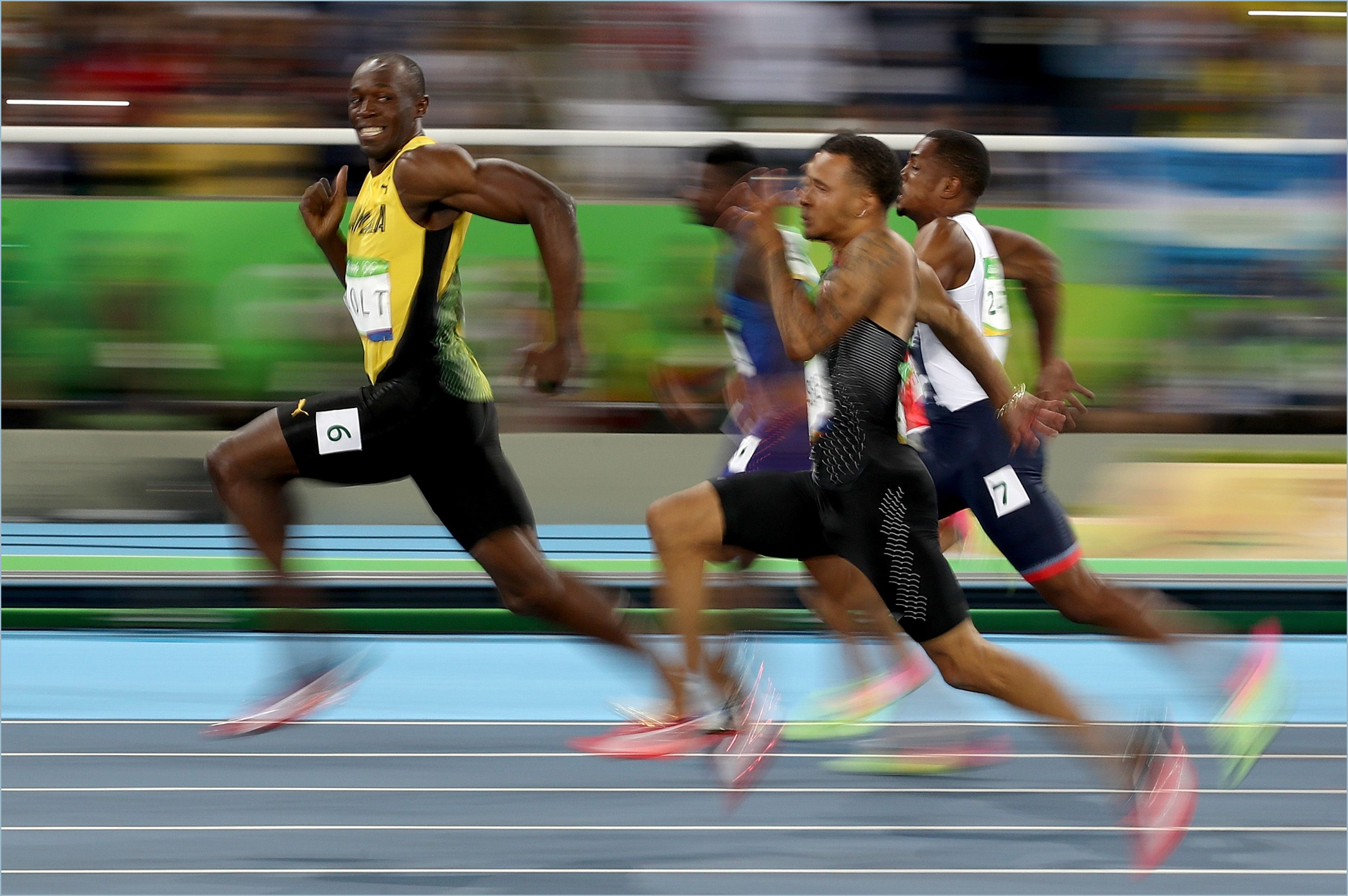
To prove my point, Usain Bolt is infamously known for glaring asymmetries in his sprint form, including a 14% difference in ground contact times between his left and right legs. But this didn’t stop him from becoming the fastest human in history.
Likewise, the best technical writers don’t just publish perfect docs. They publish useful ones. They know when to correct the draft, and when to respect what’s working.
Because sometimes, a slightly off-kilter footstrike still gets you across the line first.
***
P.S. We want to give a shoutout to coaches Nathan Taylor of XL Performance and Stu McMillan of Altis for the inspiration behind this article. Thank you both for pouring in to so many athletes.
***