


After nearly an hour of driving, I reached the edge of the state park. I parked the car, slipped on my weighted backpack, and opened the AllTrails app. The hiking trail was a moderate 1.8-mile loop. I navigated to the trailhead and started walking.
Within the first 30 minutes, I’d made a thrilling descent amongst stones and tree roots followed by a punishing climb. The 20 pounds on my back grew heavier with every step. The map showed I was progressing. AllTrails claimed the loop would take 90 minutes to complete. In my head, I’d already completed the first third.
Then about 15 minutes later, it happened.
I was halfway through the hike, deep in the woods, standing at the lowest elevation on the loop when my iPhone signal died. The location marker froze and placed me miles away from the trail. The woods felt quiet and impenetrable in that way they do when you suddenly realize you don’t know exactly where you are.
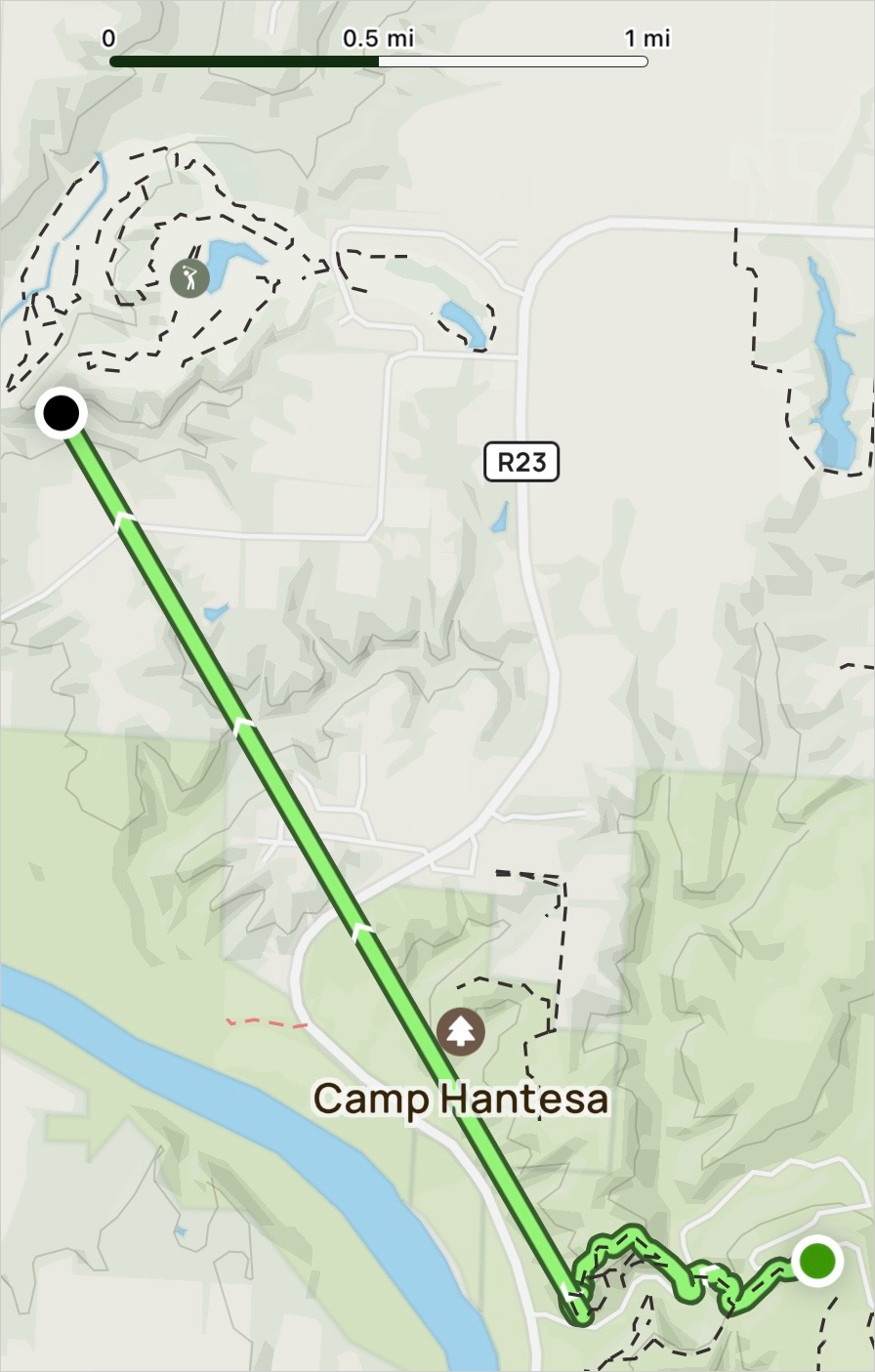
Thankfully, I had downloaded the map.
Less thankfully, I hadn’t actually studied it.
I misread turns. I trusted instincts I hadn’t honed. A couple of times, I ignored the trail entirely because the direction “felt” right. By the time I finally committed to following the map instead of my confidence, I had walked 2.8 miles just to complete the 1.8-mile loop.
Eventually, I was back at my car, unloading the weight from my shoulders and thinking about how easily a simple walk becomes something else when you’re unprepared.
The Shape of Service
Someone had walked this trail long before I did, and they hadn’t just left footprints. They had left guidance: quiet, intentional choices embedded in the map. The
switchbacks were traced with care, elevations noted, landmarks called out before they could be missed. Even the downloadable version felt deliberate, as if the person behind it anticipated the exact moment when the world would go quiet and my instincts would fail.
The mapmaker’s attention to details still reached me. And making someone else’s path navigable in your absence is service. Service is foresight translated into structure, care distilled into sequence, preparation made visible at the point where someone is most likely to get lost.
You go first so someone else doesn’t have to go blind.
Why Service Goes Unseen
Many writers don’t view their work as contribution. The reasons are subtle, psychological, and entirely human.
Our work succeeds in silence. When documentation does its job, nothing dramatic happens. There’s no visible transformation, no acknowledgment, no obvious indicator that clarity was delivered at precisely the right moment.
Proficiency minimizes the labor. As a writer’s skill grows, what once took hours becomes instinct. That ease begins to feel like insignificance. The better we get, the less we feel the weight of what we’ve made.
Accuracy becomes our compass. Feedback focuses on inaccuracies, rarely on what helped the reader succeed. Gradually, we treat error prevention as the whole craft and lose sight of our responsibility to create understanding.
We work far from the stakes. We see structure. Readers feel risk. The difference in perspective makes it easy to forget the impact of one unclear step.
How do we overcome this?
Practicing Service
Our task is not simply to transmit information but to shape a path another person can walk. These practices keep the writer aligned with the reader, the system, and the stakes.
Look for the human before the system. Every system emits two signals: how it works and how it is experienced. Writers who listen only to the logic produce clear but hollow work. Service begins by noticing where frustration spikes, where confidence drops, and where ambiguity multiplies.
Notice the knowledge you almost forgot you learned. With experience, certain insights feel too obvious to mention. They are not. What feels instinctive to the writer is often the very thing the reader needs most. When something seems unnecessary to explain, that is usually the signal to explain it.
Let confusion guide your structure. Your confusion is data. The steps that took too long, the answers that didn’t land, the moment the product contradicted itself. These are the markers of where a reader will slip. Structure the work around what confused you, not what flatters your expertise.
Write for the reader who will arrive tired. Most people come to documentation when their patience is gone and the stakes feel high. Write for that reader: the one who has already tried three things that didn’t work. Clarity is an act of care.
These practices don’t make the work easier. They make the work honest. They return the writer to the role of someone who goes first, notices what matters, and leaves behind a path someone else can trust.
Path You Leave Behind
A good document erases its own footprint. A clear sentence hides the drafts that shaped it. This invisibility defines the contribution. Service directs and shapes someone else’s experience without asking for credit.
That is the quiet power of service: you guide people you will never meet through moments you will never see. You go first, make sense of what’s in front of you, and leave behind clarity for someone else to trust.
Your users may move through your documentation without a second thought. They won’t know who walked the terrain before them or who noted the parts others missed.
But you will.
And that is enough.